
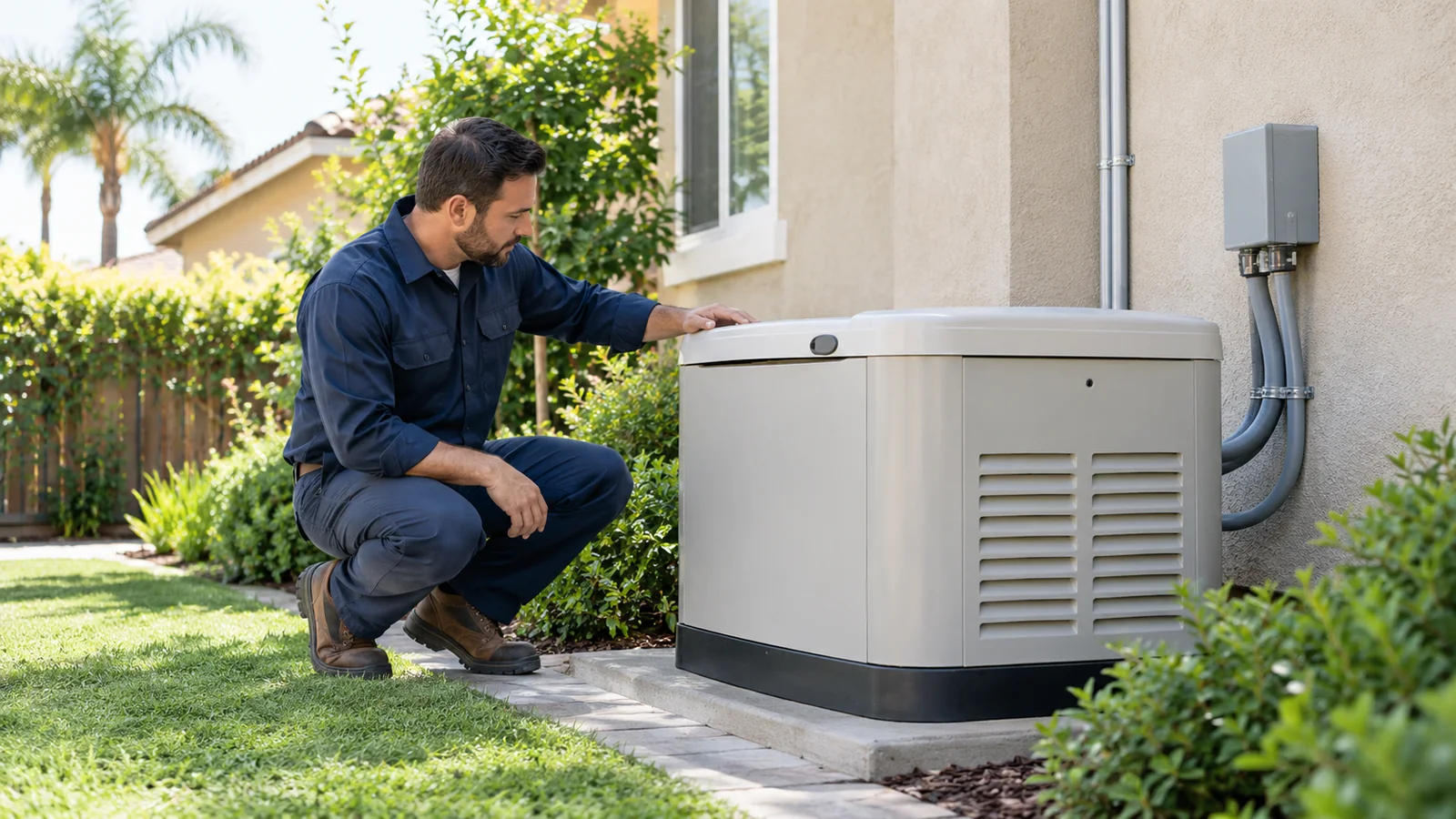
What generator installation can involve
Generator installation connects a power source to selected property circuits through equipment designed to prevent unsafe interaction with utility power. Standby systems can start automatically when configured to do so; portable generators generally require a different setup and must never be connected through an improvised cord or ordinary receptacle. The correct arrangement depends on the generator, fuel type, transfer equipment, and the loads the owner wants to support.
When comparing generator installation in Santa Ana, start with the reason for backup power: refrigeration and lighting, medical equipment, a home office, sump or other critical loads, or some larger portion of the property. A defined priority list helps a provider discuss generator size, load management, and the trade-offs between running selected circuits and attempting to serve the whole building.
Planning a home generator: output, fuel and transfer equipment
A home generator installation should start with a load plan, not with a kilowatt number from a product listing. A 10 kW, 16 kW or 20 kW standby generator can serve different needs depending on starting loads, heating and cooling equipment, the circuits selected for backup and whether loads can be managed. Square footage alone does not determine the right size. Prepare a list of must-run items and ask the provider to explain which loads can operate together.
Fuel choice also changes the project. If you are comparing a non-gasoline home generator, ask whether natural gas or propane is practical for the property. These systems have different supply, storage, regulator and site considerations; the fuel source must match the selected equipment and local installation requirements. Brands such as Generac and Kohler offer different models, but a brand name does not establish the right capacity, compatibility, availability or total installed scope. Rather than relying on a generic list of top-rated home generators, compare the load plan, fuel supply, transfer equipment, service access, maintenance requirements, warranty terms and who is responsible for each part of the installation.
A generator transfer switch or other approved transfer arrangement is an important part of connecting backup power safely. Ask whether the proposal includes electrical work, site preparation, fuel coordination, permits, inspection and startup testing. Generator installation cost depends on the equipment and the property-specific work, so request a written scope rather than relying on a generic online price. If the assessment identifies limited electrical capacity, compare the plan with an electrical panel replacement or upgrade; if safety concerns are already present, an electrical inspection may help clarify the next step.
Portable generators are different from permanently installed standby systems. The U.S. Consumer Product Safety Commission warns that portable generators must be operated outdoors, away from doors, windows and vents, because carbon monoxide can be deadly. Review the CPSC portable generator safety guidance; do not treat it as a substitute for a properly designed standby installation.
How the work is typically assessed
A planning visit typically identifies the loads to be supported, starting current for motor-driven equipment, generator location, available fuel, expected operating duration, noise constraints, access for service, and the transfer method. A generator’s advertised output does not by itself establish that it can start every connected appliance at once. Loads may need prioritizing or staged operation.
A transfer switch or approved interlock arrangement isolates the building from utility supply according to the system design. This prevents dangerous backfeeding and protects utility workers as well as occupants. The installer must select equipment compatible with the service and intended circuit arrangement; an improvised connection through a dryer outlet or extension cord is not a substitute.
Permanent systems also involve site preparation, required clearances, weather protection, exhaust direction, fuel supply and shutoff, manufacturer instructions, grounding/bonding, startup checks and owner orientation. Depending on the design, the work may require electrical, mechanical, fuel-gas, building or utility review. Ask which trades and permits the proposal includes and how testing will be documented.
Eight warning signs and what they may mean
Never operate a portable generator indoors, in a garage or near openings where exhaust could enter the building. Do not connect a generator directly to household wiring without approved transfer equipment installed by a qualified professional.
- Frequent outages affect important loads: If outages repeatedly disrupt refrigeration, communications, work, or other critical equipment, compare a backup plan with the cost and complexity of alternative preparations.
- Existing portable setup feels improvised: Extension cords through doors or a plan to feed a home through a wall receptacle indicate the need to discuss a safe, designed connection method.
- New critical equipment added: Medical-support equipment, a home office, refrigeration, or a new well or pump may change the priority list and capacity required for backup power.
- Generator cannot start the needed loads: Motor starting current and simultaneous demand can exceed a generator’s usable capacity even if the wattage labels seem close.
- No safe transfer arrangement: A generator should not energize fixed building wiring in a way that can backfeed utility lines; suitable transfer equipment is essential.
- Fuel or exhaust concerns: Poorly planned exhaust location, inadequate clearance, or unsafe fuel handling are reasons to reconsider the setup before use.
- Maintenance gaps: Old fuel, flat batteries, overdue service, or failure to test a standby unit may leave a system unavailable when needed.
- Remodel changes electrical demand: An addition, new HVAC system, electric cooking, or other high-load equipment can change backup priorities and generator size requirements.
What can cause these problems?
Generator systems fail to meet expectations when the owner’s priorities and actual load requirements were never clearly separated. A unit can be large enough for lighting and refrigeration but unable to start a large air conditioner at the same time. Starting current, power factor, sensitive electronics, and the duration of loads should be considered in the design.
An incorrect or incomplete transfer arrangement is another concern. A generator must not feed utility conductors through an improvised connection. Transfer equipment, compatible breakers, proper interlocking where applicable, and suitable wiring are part of the safety system, not optional accessories that can be added later without review.
Installation conditions also matter. Generator location influences exhaust, ventilation, clearances, noise, service access and exposure to weather. Fuel type, fuel supply capacity, battery condition, maintenance intervals, and local restrictions may influence whether a proposed solution is practical for the property.
What you can check safely before the visit
List the circuits or appliances that matter most during an outage. Separate essential needs from convenience loads and note any equipment with a motor or compressor. If you have an existing generator, record the make/model and observe any error code from the normal user display without opening covers.
Check the manufacturer’s user manual for routine items intended for owners, such as keeping the exterior clear of debris or noting scheduled maintenance. Operate only outdoors as directed and never run a generator inside a home, garage, enclosed porch, crawlspace, or near openings where exhaust can enter.
Do not connect a portable generator to a wall receptacle, alter a panel, install a transfer switch, or modify fuel piping yourself unless legally qualified and specifically authorized. Tell the provider whether you want a permanently installed standby system, a safe portable-generator inlet, or an assessment of an existing installation.
A practical step-by-step service process
Generator planning typically covers the essential loads, expected runtime, equipment location, fuel supply, transfer equipment and local permitting needs. Ask who coordinates electrical and fuel-related work, what testing is included and how the system will be handed over.
- Prioritize critical loads. Identify what must stay powered, the acceptable trade-offs, and which appliances can be switched off or operated at different times.
- Survey site and fuel. Review potential generator location, ventilation, clearances, access, fuel supply, noise, wiring route and any property-management constraints.
- Design transfer and circuits. The proposal should describe generator capacity, transfer equipment, selected circuits, load management, protection, permits and required trade coordination.
- Install and commission. After installation and required reviews, the provider should demonstrate startup, transfer behavior, safe shutdown, routine checks and the maintenance plan.
Cost factors to ask about
Generator installation prices vary substantially because the equipment is only one part of the system. Compare the generator, transfer equipment, fuel work, wiring, site preparation, permits, commissioning and owner training as separate line items.
| Cost factor | What to clarify |
|---|---|
| Generator type and capacity | Standby versus portable-ready systems, desired output, enclosure and manufacturer features affect equipment cost. |
| Transfer equipment | A manual or automatic transfer arrangement and the number of supported circuits affect components and labor. |
| Fuel supply | Natural gas or propane planning can require piping, regulator work, tank arrangements or coordination with a fuel professional. |
| Site and wiring route | Distance from panel, slab or base preparation, trenching, conduit, clearances, sound concerns and access affect labor. |
| Permit, inspection and startup | Required permits, electrical or fuel inspections, load tests, setup and operator walkthrough should be specified. |
Generator costs vary with capacity, standby versus portable equipment, transfer-switch requirements, fuel arrangements, trenching or wiring, permits and site preparation. Compare complete installation scopes rather than equipment prices alone.
When to treat the situation as urgent
During a power outage, do not improvise a connection that feeds fixed building wiring or operate a generator indoors. Carbon monoxide can be deadly without a reliable warning, so generator placement and exhaust precautions are essential. If you suspect carbon monoxide exposure, move outdoors and contact emergency services.
For a planned installation, the important decision is a correctly designed system rather than a quick connection. If an existing standby unit fails during an outage, use only the manufacturer’s safe user-level instructions and avoid opening the equipment or fuel system. Contact a qualified service provider and confirm actual availability.
Planning this work in Santa Ana
Generator planning in Santa Ana should account for the property layout, nearby openings, equipment clearances, access for fuel or service, and the local approval path. A system that works on one lot may not suit a property with limited side-yard space, close windows, a shared wall, or a restricted service route. The installer should assess the actual site rather than promise a location before measuring.
If your backup plan includes central air, refrigeration, an EV charger, or larger electric heating loads, talk about those interactions alongside the generator. A panel upgrade review or electrical inspection may help establish the condition and capacity of the existing system before a generator is specified.
The right proposal explains which loads are supported, which are excluded, how transfer equipment works, what fuel supply is needed, the clearances and placement constraints, how the system will be tested, and how often it should be maintained. Ask for a practical demonstration of starting, transfer, shutdown and routine checks rather than relying on a brochure alone.
The same service question can arise in different parts of Santa Ana for different property-specific reasons. For neighborhood context, read the local planning notes for Park Santiago and Floral Park. These guides help you prepare a clearer request; the provider still needs to confirm coverage and assess the actual property.