
What emergency electrical help can involve
An urgent electrical concern is a condition that may create an immediate shock, fire, or equipment-damage risk if it is ignored. The word “emergency” describes the seriousness of the symptom, not a promise that a particular contractor can arrive at a particular time. Smoke, flame, visible arcing, or a strong burning smell near wiring should be treated more cautiously than an ordinary light that has stopped working.
For people looking for an emergency electrician in Santa Ana, the first priority is to protect people and move away from a suspected hazard. ProVolt helps route electrical service inquiries; the independent provider can confirm whether it handles the problem, its availability, and any charges. For a broader overview of local help, begin with our Santa Ana electrician service guide.
When to request urgent electrical help in Santa Ana
If you have searched for an emergency electrician near me, first distinguish an immediate hazard from a problem that can be scheduled. Smoke, fire, active arcing, a strong burning smell, exposed energized wiring or a shock incident can require emergency action. Keep people away from the affected area. If there is smoke or fire, leave the building and contact emergency services; do not touch a sparking device or try to open an electrical panel under unsafe conditions.
Repeated breaker trips, a hot switch or outlet, unexplained flickering across multiple rooms, a sudden partial power loss or a damaged service entrance also deserve prompt attention. Those symptoms can have different causes, so describe where the issue occurs, when it began, what changed immediately beforehand, and whether there is heat, odor, sound or visible damage. Do not keep resetting a breaker that trips again or replace it with a larger rating to stop the interruption.
Calling to discuss an urgent electrical service request does not guarantee that a provider is available at a particular hour or that a specific arrival time can be promised. Confirm current coverage and timing directly before relying on a visit. Depending on the cause, the next appropriate service may be outlet repair, an electrical panel or breaker assessment, or a broader electrical safety inspection. Provider availability and arrival timing must be confirmed directly.
How the work is typically assessed
Triage starts by describing the symptom clearly: what happened, where it happened, whether it is still happening, and whether anyone smelled smoke, saw sparks, felt a shock, or noticed heat. This information helps a provider decide what kind of visit may be appropriate. Do not touch a damaged receptacle, exposed wire, hot switch, wet panel, or electrical equipment that may still be energized just to collect more details.
An electrician’s on-site assessment may include a visual review of the affected area, circuit loading, the condition of the panel and devices, and appropriate electrical testing. The method depends on the symptom. A repeatedly tripping breaker may call for diagnosing the circuit and connected load; a scorched receptacle may require examining the device, terminations, box, and wiring before a repair plan is set.
When the immediate hazard is controlled, the provider should explain what was found, which work is recommended, what can safely wait, and what the estimate includes. Ask whether the visit covers diagnosis only or also repair, whether parts are additional, and whether a permit or follow-up inspection may be needed. Do not assume every inquiry can be handled by the same technician or on the same schedule.
Eight warning signs and what they may mean
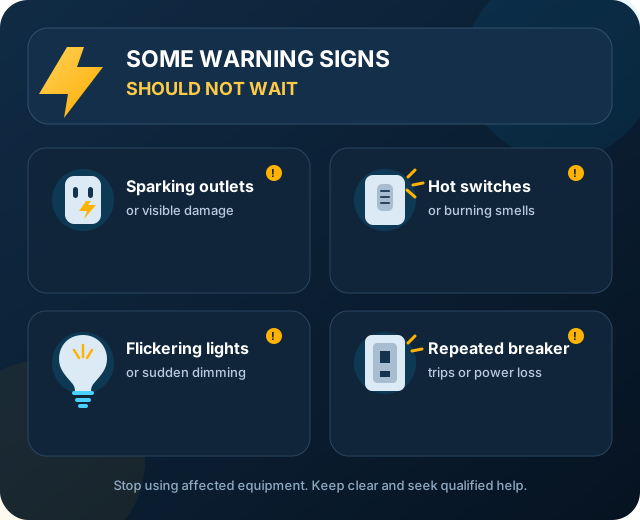
For urgent symptoms such as smoke, active arcing or a strong burning smell, prioritize getting people away from the hazard. Do not open a panel or handle damaged equipment to investigate; share only what you can observe safely.
- Sparks from an outlet or switch: Visible sparking beyond a tiny moment when a plug is inserted can signal a damaged device, loose connection, or arcing. Stop using it and keep people away.
- Burning or fishy odor: An unusual hot-plastic or fishy smell near an outlet, fixture, or panel may come from overheated insulation or components. Do not keep testing the device.
- Smoke or visible flame: Smoke or flame means leave the immediate area, alert others, and contact emergency services. Never pour water onto electrical equipment or attempt a repair.
- Warm or discolored faceplate: Heat, browning, melting, or crackling at a switch or receptacle can mean poor contact or excessive heat. Do not remove the cover to investigate.
- Repeated breaker trips: A breaker that trips again after reset may be protecting against overload or a fault. Avoid repeated resets and unplug only what can be disconnected safely.
- Shock or tingling sensation: A shock or tingling from an appliance, metal enclosure, or faucet can indicate an electrical fault. Stop contact and seek qualified guidance; if injury occurs, get medical help.
- Water near electrical equipment: Leaks, flooding, or dampness near a panel, outlet, or appliance create a dangerous combination. Stay clear and do not operate nearby switches.
- Sudden widespread power changes: Repeated flicker, buzzing, or partial power loss across several areas can point to a supply or connection issue. If accompanied by heat or odor, move away and seek urgent help.
What can cause these problems?
Overloaded circuits are one possible reason a breaker trips: several high-draw appliances may be operating on a circuit not suited to that simultaneous demand. The same symptom can also come from a short circuit, ground fault, damaged cord, failing appliance, or a problem inside a device or panel. The sound or timing of a trip is not enough to identify the cause safely.
Loose or deteriorated connections can create localized heat, flickering, buzzing, discoloration, or intermittent operation. A faceplate may look normal while an issue is behind it, so absence of a visible mark does not prove a device is safe. Repeatedly plugging equipment in to “see if it happens again” can increase exposure to the fault.
External events can also affect electrical equipment: water intrusion, impact, a recent installation, a storm-related power disturbance, or damaged outdoor wiring. In multi-unit or commercial settings, more than one circuit or a shared electrical component may be involved. A qualified provider should distinguish a property-side problem from an issue that needs to be reported to the utility or emergency services.
What you can check safely before the visit
Keep people away from the affected area and discontinue use of the device if it is safe to do so without touching damaged or hot parts. If there is smoke, flame, active arcing, or immediate danger, leave and call emergency services instead of trying to isolate the circuit.
Without opening covers or touching wiring, note which room or equipment is affected, when the symptom started, whether it followed rain or an appliance change, and whether lights elsewhere are normal. A photo taken from a safe distance can sometimes help explain visible damage; do not approach a burning, smoking, or wet hazard to take one.
Do not remove a panel cover, probe a receptacle, tighten a terminal, bypass a breaker, or repeatedly reset a trip. If a breaker is off, leave it off when the cause is unknown. Share your observations with the provider and ask what precautions to maintain while waiting for advice.
A practical step-by-step service process
An urgent inquiry commonly starts with identifying the location, affected circuit or device, visible symptoms and any immediate danger. The provider can then explain whether it can respond, what an initial assessment includes and what timing is actually available.
- Describe the symptoms. Explain the location, timing, affected circuit or equipment, and any smoke, heat, sparks, odor, water, or shock. State whether the condition is currently active.
- Confirm scope and availability. Ask whether the provider handles this type of fault, when it may be able to respond, and what diagnostic or call-out charges apply. Do not assume a specific arrival time before confirmation.
- Review diagnosis and choices. The provider should explain the likely source, immediate safety concerns, recommended repair, and any alternatives. Ask what the quoted work includes and what requires separate approval.
- Agree before work proceeds. Confirm the estimate, parts, permit considerations where relevant, and expected testing. Keep the written scope and any instructions for restoring equipment or using the circuit afterward.
Cost factors to ask about
Urgent electrical costs vary because “emergency” can mean a diagnostic visit, a device replacement, a circuit repair, or a larger fault that takes time to trace. Ask for the diagnostic fee and how it applies to approved repairs before scheduling.
| Cost factor | What to clarify |
|---|---|
| Diagnostic visit | Whether the charge covers travel, initial testing, and a written recommendation, or whether some tasks cost extra. |
| Time and timing | The time required to find an intermittent fault and any disclosed after-hours or priority scheduling fee, if offered. |
| Parts and access | The cost of replacing a receptacle, breaker, conductor, enclosure, or other damaged component, plus access difficulty. |
| Extent of the fault | A single failed device differs from damaged branch-circuit wiring, panel issues, or a condition affecting multiple circuits. |
| Permits and follow-up | Some work may require permits, inspections, or a second visit; confirm which are included in the estimate. |
Urgent electrical costs can reflect diagnostic time, timing, access, damaged components and any follow-up work. Ask whether an initial visit has a charge and request approval before the provider begins additional repairs.
When to treat the situation as urgent
If you see flames, smoke, active arcing, or a rapidly worsening burning smell, move to safety and contact emergency services. Do not try to extinguish an electrical fire with water, touch a panel in a wet area, or remain inside to troubleshoot. A phone inquiry is not a substitute for emergency response.
For repeated breaker trips, a warm outlet, intermittent power, or unexplained buzzing without visible fire, stop using the affected equipment and seek qualified advice promptly. Ask the provider whether the described symptom needs immediate attention or can be scheduled. Availability is provider-specific, so confirm the actual timing directly.
Planning this work in Santa Ana
Santa Ana properties include a range of residential and commercial settings, so the context can matter as much as the symptom. A single-family home, apartment, storefront, or shared building may have different access rules and different people responsible for particular electrical equipment. Tell the provider whether the affected panel or room is inside a private unit, common area, leased space, or business premises.
If you are coordinating access in Santa Ana, have the property address, unit or suite, a safe description of the affected area, and the best callback method ready. If the issue may involve common-area wiring or a building service, notify the property manager as appropriate. For non-urgent planned work, related information is available in our electrical inspection guide and panel upgrade guide.
A useful inquiry does not require you to diagnose the fault yourself. Your role is to report the symptoms accurately, avoid the suspected hazard, and ask clear questions about scope, cost, and response timing. The provider’s role is to assess the condition and explain the work it recommends before you authorize it.
The same service question can arise in different parts of Santa Ana for different property-specific reasons. For neighborhood context, read the local planning notes for Downtown Santa Ana and Park Santiago. These guides help you prepare a clearer request; the provider still needs to confirm coverage and assess the actual property.