
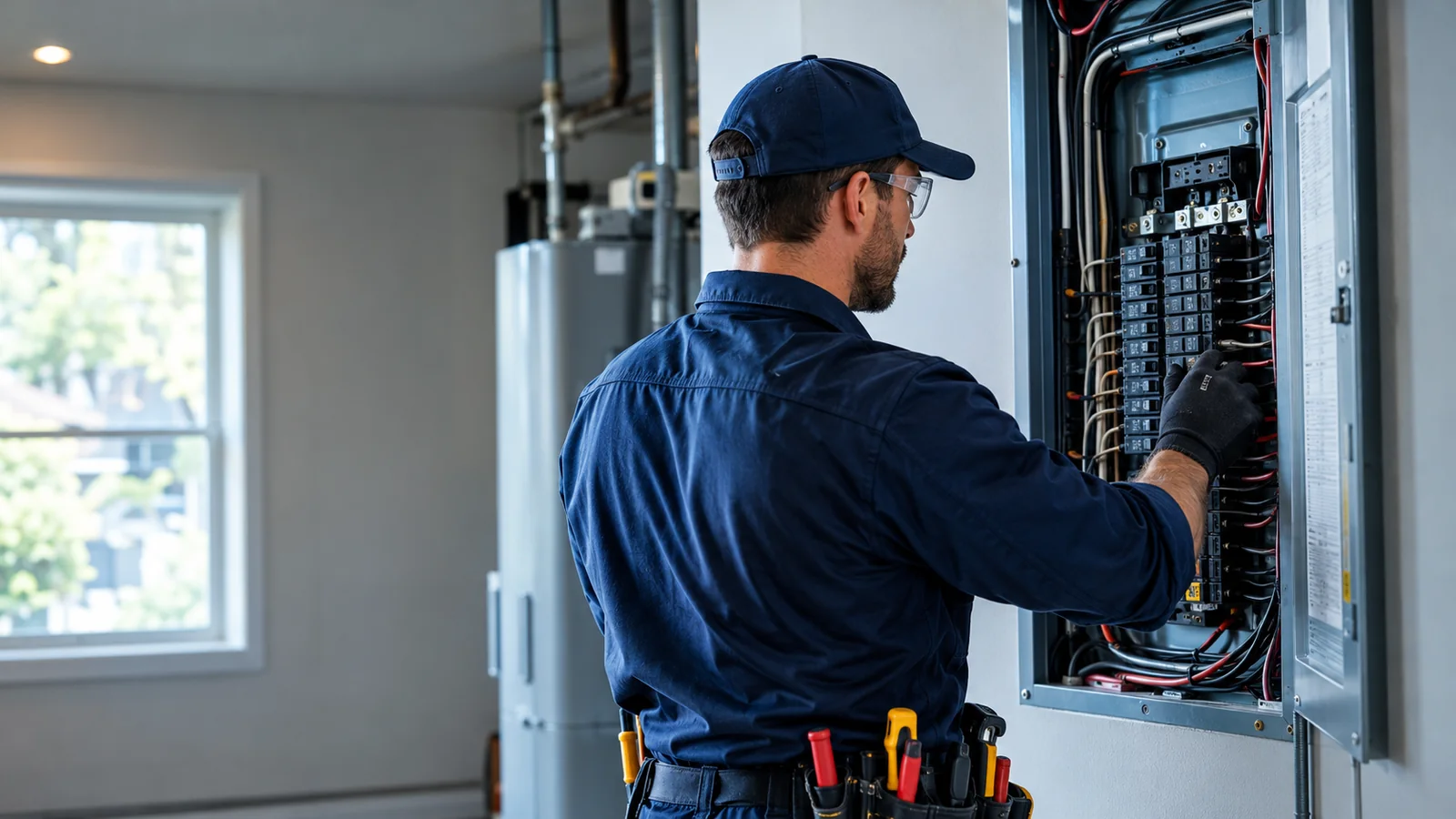
What electrical panel upgrades can involve
An electrical panel distributes power to branch circuits and provides overcurrent protection through breakers or fuses. An upgrade may mean replacing an obsolete or damaged panel, changing capacity, reorganizing circuits, or coordinating a broader service change. These are not interchangeable jobs: the correct scope depends on the existing service, connected loads, condition of conductors, and the requirements of the project.
For homeowners searching for electrical panel upgrades in Santa Ana, the goal is not simply to install the largest panel available. The panel, service conductors, meter equipment, grounding and bonding, and circuit layout must work together. Use the Santa Ana electrician resource to explore related electrical work and prepare questions for a provider.
Circuit breaker replacement vs. electrical panel replacement
A circuit breaker replacement is not the same as an electrical panel replacement. A single breaker may need attention because it is damaged or no longer operating correctly, while repeated trips can also indicate overload, a fault in connected equipment, a wiring issue or another condition that requires diagnosis. Replacing a breaker with a higher-rated one simply to stop tripping can leave wiring without appropriate protection and is not a safe shortcut.
A broader electrical panel upgrade or breaker box replacement may be considered when the panel is damaged, unsuitable for planned equipment, lacks practical space for intended circuits, or forms part of a larger service change. A fuse box replacement can involve more than swapping one enclosure: the service equipment, grounding and bonding, conductor condition, circuit protection, meter arrangements and utility coordination may affect the scope. Age alone does not prove that every panel needs replacement; condition and actual capacity should guide the decision.
When comparing proposals, ask the provider to describe the diagnosed problem, the specific equipment to be replaced, whether the service capacity is changing, what will happen to existing circuits, expected power interruption, permits and inspection responsibilities. If the proposed upgrade is driven by a new EV charger or backup generator, review the related Level 2 home charger or generator installation requirements together rather than treating each project in isolation. For broader concerns about older wiring, a whole-home rewiring assessment may also be relevant.
How the work is typically assessed
Planning normally begins with an inventory of the equipment already served by the panel and the loads likely to be added. An electrician may review heating and cooling equipment, kitchen appliances, laundry, workshops, electric vehicle charging, generators, and future remodeling plans. The load calculation helps determine whether the concern is a panel condition, circuit-space shortage, service capacity, or a combination.
The panel inspection also considers physical condition and compatibility. Rust, moisture, heat damage, buzzing, evidence of arcing, improvised modifications, damaged breakers, crowded conductors, and missing cover parts can affect safety and the replacement recommendation. The provider should verify the model and breaker compatibility rather than selecting parts based on appearance alone.
A replacement can involve utility coordination, a permit, inspection, temporary power interruption, and a defined reconnection plan. The estimate should state what happens to existing circuits, whether new breakers or circuits are included, and what work is excluded. If the project adds an EV charger, generator, or major appliance, ask whether its circuit and load needs are included in the design.
Eight warning signs and what they may mean
If a panel is hot, buzzing, smoking, visibly damaged or affected by water, keep clear and seek qualified help. Do not remove the cover, touch internal components or repeatedly reset breakers to try to identify the cause.
- Frequent unexplained trips: A breaker that trips repeatedly may indicate overload, a fault, or a failed component. A panel upgrade is not automatically the fix; the circuit and load must be diagnosed.
- Visible rust or moisture: Corrosion, water marks, or dampness at the enclosure call for assessment because moisture can damage equipment and create unsafe conditions.
- Burning odor or heat: Unusual heat, melted plastic, discoloration, smoke, or a burning smell near the panel is a serious warning. Keep away and seek urgent help.
- Insufficient breaker spaces: A remodeling plan or new equipment may require circuits that cannot be responsibly added to the current panel layout. Avoid tandem-breaker assumptions without model-specific verification.
- New high-draw equipment planned: An EV charger, electric range, heat pump, or workshop equipment may require a load review, new dedicated circuit, or service adjustment.
- Unclear or improvised labeling: Missing labels, mixed modifications, or evidence of amateur changes make it harder to isolate circuits and may warrant a comprehensive inspection.
- Aging or damaged components: Age alone does not decide replacement, but obsolete parts, damage, recall concerns, or unavailable compatible breakers can affect serviceability.
- A remodel exposes capacity limits: An addition, accessory space, or electrification project may reveal that the original distribution plan no longer fits the home’s needs.
What can cause these problems?
A panel can become unsuitable because the property’s electrical demand has changed over time. A house that originally served lighting and a modest set of appliances may later add air conditioning, electric cooking, laundry equipment, an EV charger, a heat pump, or a workshop. The right response requires a load assessment; adding a larger panel without reviewing upstream capacity does not solve every limitation.
Physical deterioration is another factor. Water intrusion, corrosion, excessive heat, damaged bus components, poor connections, incorrect breaker types, or prior modifications can compromise equipment. Some faults may be repairable, while others make replacement the safer long-term recommendation. The decision should be based on findings, not an automatic claim that every older panel must be replaced.
Capacity is sometimes confused with available breaker spaces. A panel can have open spaces but insufficient calculated capacity for new loads, or may have capacity yet no suitable spaces for a new dedicated circuit. Service conductors, grounding and bonding, available fault current, equipment ratings, and local code requirements all influence the approved design.
What you can check safely before the visit
From outside the panel, look for visible rust, moisture, scorch marks, missing cover screws, a hot surface, or a burning odor. Do not remove the cover, touch internal parts, or place a hand near exposed conductors. If there is smoke or active arcing, move away and seek emergency help.
Prepare a list of major electrical equipment already in the property and any planned additions. Include the size or model of a planned EV charger, heat pump, generator, range, or other high-demand device if known. Take photographs only of labels and the closed exterior when you can do so safely.
Do not replace breakers, rearrange circuits, drill the enclosure, install tandem breakers, or attempt to increase service capacity yourself. Ask whether the estimate includes load calculations, permit fees, utility coordination, circuit labeling, grounding/bonding work, drywall or patching, and inspection corrections.
A practical step-by-step service process
A panel assessment usually considers the existing equipment, service capacity, circuit arrangement, planned loads and visible condition. Ask how the recommendation was reached, whether permits or inspections may apply and what temporary power interruptions to expect.
- Inventory demand and goals. Discuss the building type, current appliances, future electrification plans, circuit additions, nuisance trips, and any known panel model or damage.
- Inspect existing equipment. The electrician evaluates the enclosure, breakers, wiring terminations, service capacity, grounding and bonding, and the condition of accessible equipment.
- Prepare a compliant scope. The proposal should identify panel rating and type, included circuits or breakers, utility coordination, permits, anticipated interruption, labeling, and any excluded repairs.
- Install, label and verify. After authorization and necessary coordination, the work is completed and inspected as required. Ask for final labeling, test results or inspection records applicable to the job, and operating guidance.
Cost factors to ask about
Panel-upgrade pricing depends on the scope rather than one flat price. A straightforward replacement in a readily accessible location differs from a service increase, relocation, extensive circuit correction, or project requiring utility coordination.
| Cost factor | What to clarify |
|---|---|
| Panel type and rating | The equipment selected must suit calculated load, available service, approved design and compatible breaker requirements. |
| Service or meter work | A service increase or relocation may require additional utility coordination and equipment beyond the panel enclosure. |
| Circuit condition and count | Damaged conductors, mislabeled circuits, missing grounding, or circuits that need correction can add labor and materials. |
| Location and access | Indoor/outdoor placement, working clearance, wall condition, weather protection, and difficult access affect labor. |
| Permits and restoration | Permit and inspection fees, utility scheduling, drywall repair, painting, and follow-up visits should be itemized. |
Panel project pricing depends on the equipment selected, service capacity, circuit work, grounding or bonding changes, site access and any required permits or inspections. Request a written estimate showing what is included and what could change it.
When to treat the situation as urgent
A panel that smokes, sparks, smells burnt, makes an unusual crackling sound, or has visible melting should be treated as a serious hazard. Keep clear; do not remove the dead front or attempt to tighten a connection. If there is fire or immediate danger, evacuate and contact emergency services.
A panel upgrade is generally a planned project when the concern is future capacity or adding equipment. If a breaker trips repeatedly, a qualified electrician should diagnose the underlying cause before anyone assumes replacement is required. Ask about a safe interim arrangement and do not restore a circuit that has been identified as unsafe.
Planning this work in Santa Ana
Electrical panel projects in Santa Ana can range from modest homes to multi-unit buildings and commercial spaces. Access to the meter, shared service equipment, property-management approval, and utility coordination may vary. If the panel is in a tenant space or a shared electrical room, clarify who can authorize work and who will coordinate access.
For a home modernization plan, discuss the whole project rather than only the panel. An EV charger circuit, standby generator, or rewiring project may change the design. Describe near-term and future loads so the provider can consider them together instead of treating each installation as unrelated.
A useful panel proposal should explain why the recommended equipment and rating fit the calculated load, what existing conditions must be corrected, which permits and inspections apply, and which portions of the property may lose power during the change. Compare scopes line by line rather than comparing only the headline price.
The same service question can arise in different parts of Santa Ana for different property-specific reasons. For neighborhood context, read the local planning notes for Floral Park and Wilshire Square. These guides help you prepare a clearer request; the provider still needs to confirm coverage and assess the actual property.